Can a Interlock Switch Mechanical Interlock Socket Box Reduce Electrical Hazards
 Home / News / Industry News / Can a Interlock Switch Mechanical Interlock Socket Box Reduce Electrical Hazards
 In many industrial and commercial environments, electricity is not just a utility. It is part of daily operations, powering tools, machines, and temporary equipment setups. With this constant use, safety becomes a quiet but important concern. One device often mentioned in this context is the mechanical interlock socket box.
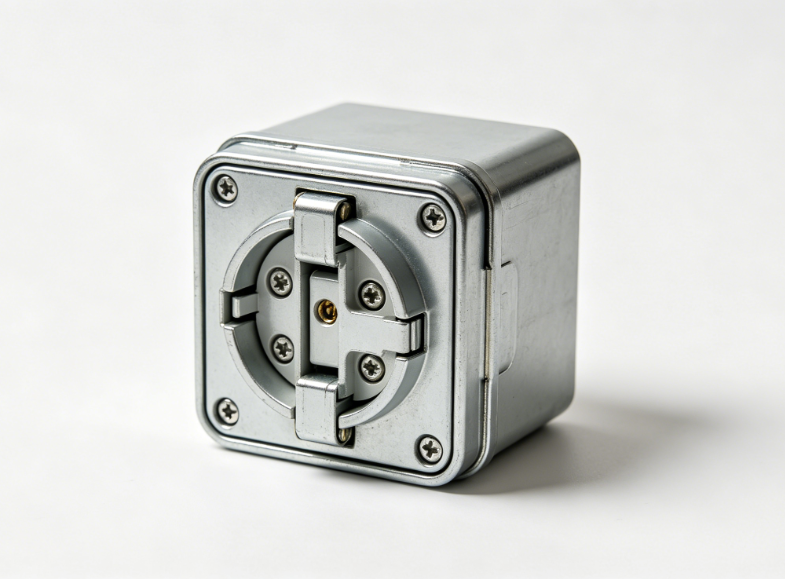
It is designed around a simple idea: control access to electricity in a way that reduces accidental contact and unintended switching. Instead of relying only on user attention, it introduces a physical condition that must be met before power can flow.
We are looks at how such a system relates to electrical hazards and where its role becomes more noticeable in real working environments.
A mechanical interlock socket box is a power access point that uses a physical locking relationship between switching and plugging actions. In simple terms, it prevents power from being connected or disconnected in an uncontrolled way.
The idea is not to change how electricity works, but to change how people interact with it. The box creates a sequence that must be followed. Power cannot be accessed unless the correct steps are completed in order.
In many work environments, this reduces situations where cables are inserted or removed while electricity is still active. That small moment of timing is often where risk appears.
The system is based on physical movement rather than electronic control. That makes its behavior easy to understand even in busy environments where attention is divided.
Electrical hazards rarely come from a single dramatic event. They often appear in small, repeated actions during daily work.
Some common situations include:
These situations are not always noticed at the moment they happen. They often build up from routine behavior.
In environments where equipment is frequently moved or changed, the chance of human error increases slightly. Not because of negligence, but because of repetition and time pressure.
This is where controlled access systems become relevant.
The main safety effect of a mechanical interlock socket box comes from how it changes user action.
Instead of allowing free connection and disconnection at any time, it creates a required sequence. Power is not simply "available." It becomes conditional.
This changes behavior in a subtle way:
The system does not remove electricity. It reshapes how it is accessed.
In environments where multiple people share equipment, this structure helps reduce inconsistent handling.
A simple comparison helps clarify the difference:
| Situation | Without Interlock | With Mechanical Interlock |
|---|---|---|
| Cable connection | Can be done anytime | Follows a set order |
| Power status awareness | Often unclear | More noticeable |
| Accidental switching | More possible | Reduced by structure |
| User behavior | Variable | More consistent |
The key change is not technical complexity. It is behavioral control.
Electrical systems already include many protective layers. However, not all risks come from system failure. Some come from timing and human interaction.
A mechanical interlock socket box focuses on that gap.
Physical control matters because it removes ambiguity. When an action must follow a fixed sequence, there is less room for accidental deviation.
In busy environments, attention is often divided. Workers may handle multiple tasks at once. In such conditions, small steps like switching power before connection can be missed.
A mechanical system reduces dependence on memory or attention. It guides the action through structure.
This is especially useful in temporary setups where equipment is frequently moved or replaced.
Mechanical interlock socket boxes are often found in environments where equipment use changes regularly. The goal is not only to supply power, but to manage how it is accessed during changing conditions.
Typical environments include:
In these spaces, power points are not always used in a fixed way. Equipment may be connected for a short time, then removed and replaced elsewhere.
The socket box helps keep this process structured.
The interaction between user and system follows a simple pattern.
Before connection, the system requires a controlled state. This prevents power from being active during insertion.
During connection, the action must follow a clear physical path. There is little room for partial engagement, which helps reduce unstable contact situations.
During disconnection, the system again guides the sequence so that power is not removed while still active.
The key point is not speed. It is order.
Even when used repeatedly throughout the day, the pattern remains the same. This consistency reduces variation in how people handle electrical access.
Shared environments often introduce variability. Different users may handle equipment in slightly different ways. Over time, this inconsistency can create small safety gaps.
A mechanical interlock socket box reduces this variation by making the process uniform.
Regardless of who uses it, the steps remain the same. That creates a shared structure for interaction.
In practice, this helps in situations such as:
The system does not depend on user experience level. It supports both experienced and less familiar users in the same way.
Visibility is often underestimated in electrical safety. When power states are unclear, users may assume conditions that are not correct.
Mechanical interlock socket boxes often make interaction more visible through physical position changes during operation. Even without complex indicators, the state of the socket can be understood through its configuration.
This reduces uncertainty.
When users can clearly see whether the system is in a connection-ready state or not, they are less likely to perform actions at the wrong time.
Clarity reduces hesitation, and hesitation often reduces unsafe timing.
Modern work environments are rarely fixed. Equipment moves, stations change, and workflows adjust.
In such conditions, power access points must support flexibility without creating confusion.
A mechanical interlock socket box fits into this by staying consistent even when surroundings change. Its behavior does not depend on where it is placed or how often it is used.
Whether installed in a fixed station or a movable setup, the interaction pattern remains stable.
This makes it easier for users to adapt when layouts shift.
While mechanical interlock systems help guide behavior, they do not eliminate all risks.
Electrical safety still depends on:
The socket box reduces certain types of accidental interaction, but it is not a complete replacement for general safety practices.
In environments with heavy usage, wear and external factors can still influence performance over time. That is why regular observation remains part of normal operation.
Modern safety approaches often focus on reducing dependence on attention alone. Instead of expecting better user behavior, systems are designed to guide actions naturally.
A mechanical interlock socket box follows this idea.
It does not try to stop users from making mistakes through warnings or reminders. It changes the physical process so that certain mistakes become less likely.
This approach is subtle. It works in the background, influencing behavior without drawing attention to itself.
In environments where electrical use is frequent and repetitive, this kind of structure becomes part of daily workflow rather than a separate safety layer.
It blends into operation while quietly shaping how power is accessed and released.
 +86-577-62731897
 shireen@nante.com
 No.688 chezhan Road, Liushi town, Wenzhou, China
Copyright © 2024 Fly-Dragon Electrical Co., Ltd. All Rights Reserved.
 浙公网安备33038202003041号
 Privacy
Outdoor Socket Box Factory & Outdoor Electrical Distribution Panel Factory



 English
 Español
 Português
 Deutsch