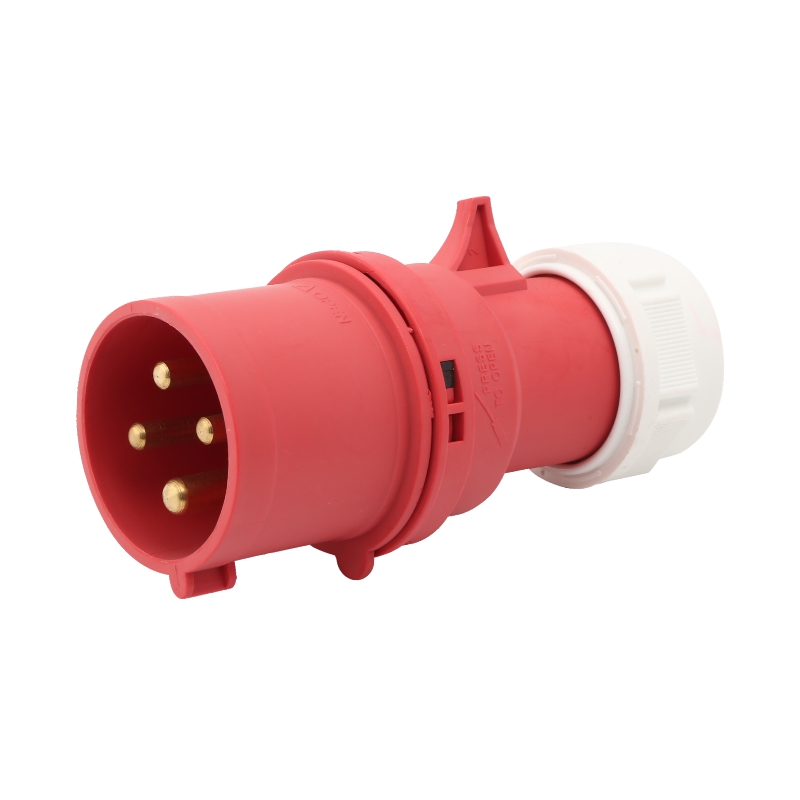
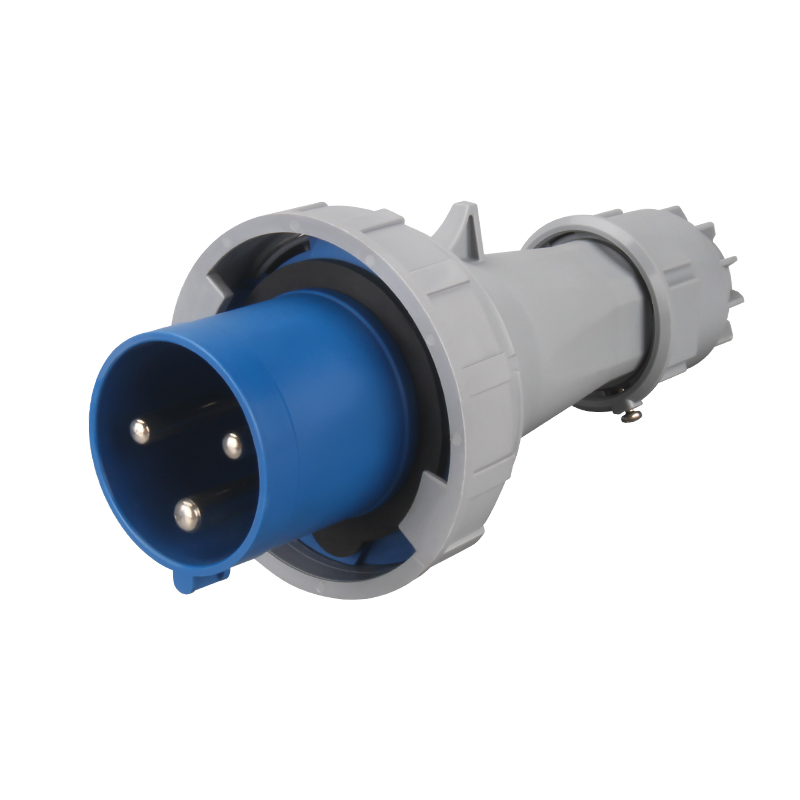
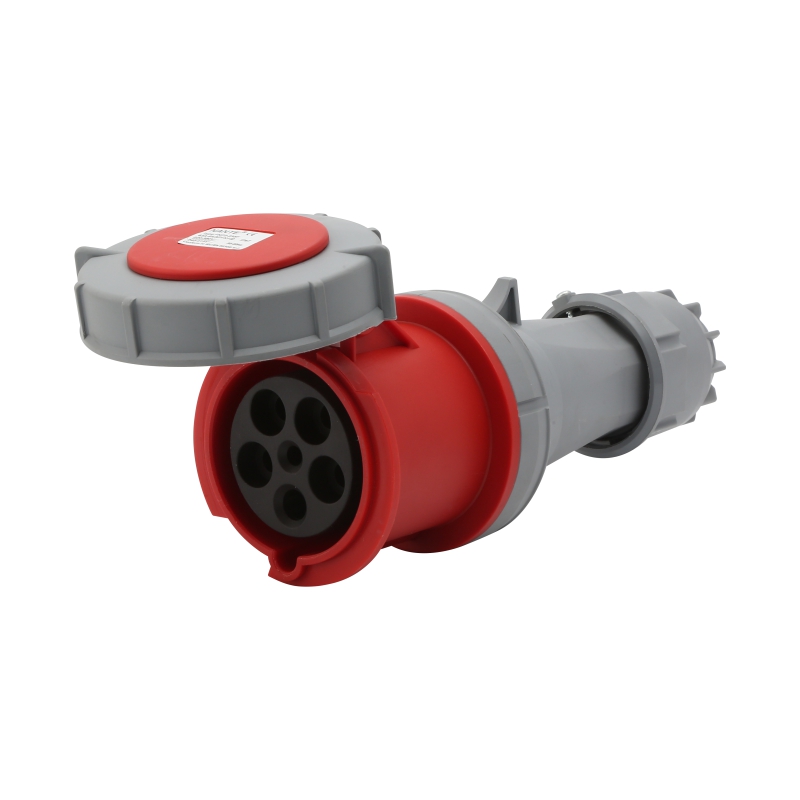
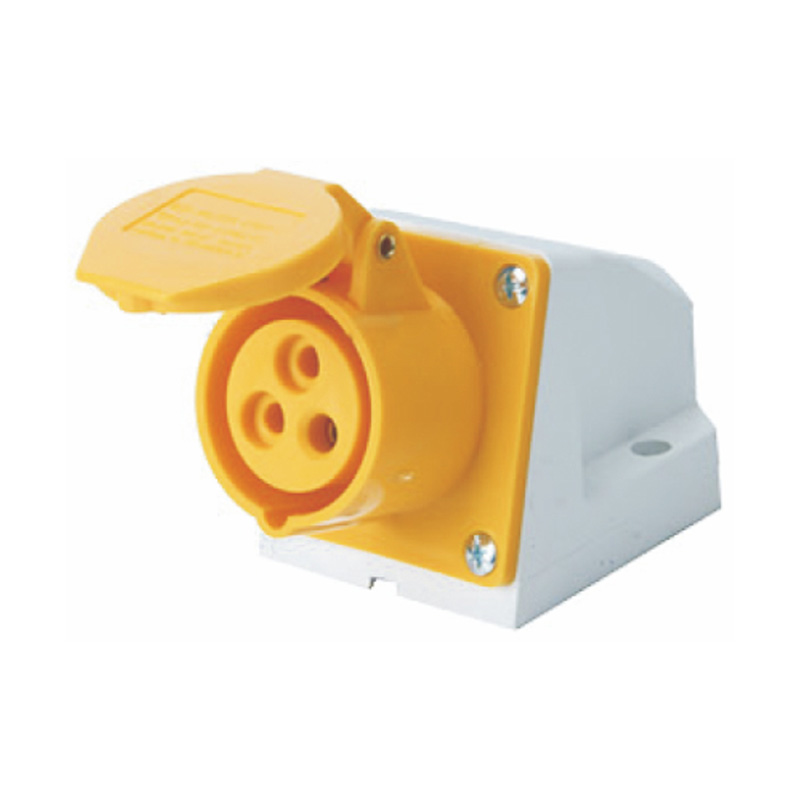
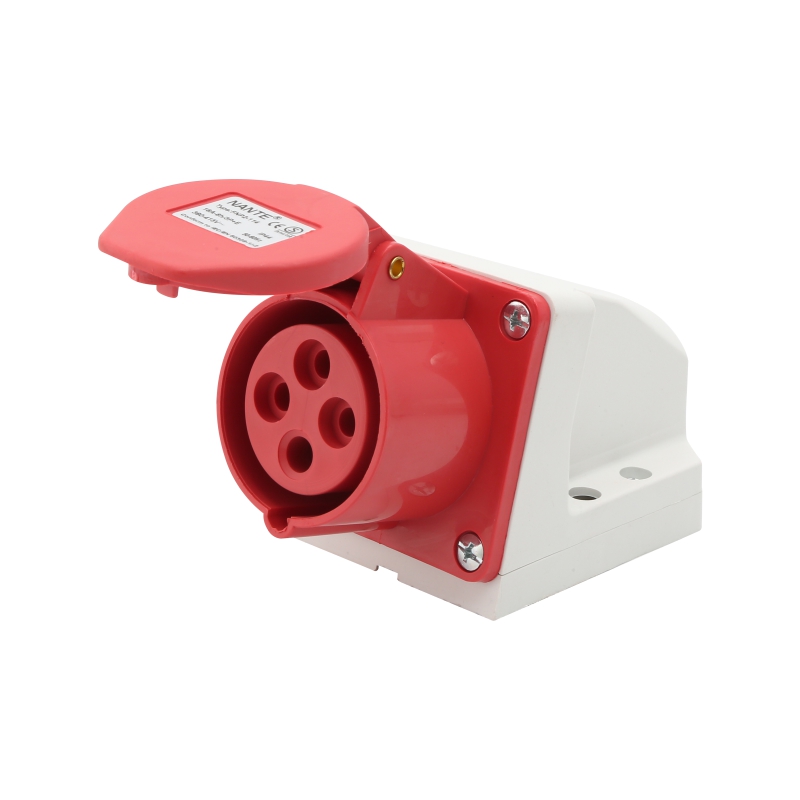
How Does an Industrial Electrical Plug Protect Cables
A forklift charger cable gets dragged across a warehouse floor, a portable grinder is tugged around a fabrication bay, and a pump cable vibrates against a frame all shift long. In each case the weak point is the same spot: where the cable meets the plug. Strain relief in an Industrial Electrical Plug supports the cable at that entry, keeping pulling and bending forces away from the internal wiring. In a Waterproof Industrial Plug, the same area must also work with sealing components so that moisture and dust stay outside.
A plug can have a sturdy housing and suitable electrical ratings and still develop faults if the cable entry is poorly supported. Looking at how strain relief, sealing, and selection details fit together helps engineers and buyers judge a plug against its real working conditions.
Strain relief is a structural feature that secures the cable where it enters the plug. Its purpose is to reduce the mechanical load passed from the cable to the terminals inside. Without that support, every tug and bend lands on the wiring connections.
A well-designed entry performs several jobs:
They share a location but not a purpose. Strain relief handles mechanical load, while sealing parts keep water and dust out of the housing.
| Component | Main Function | Design Consideration |
|---|---|---|
| Strain relief | Manages cable movement and stress | Retention and flexibility |
| Cable gland | Secures the cable and may seal it | Cable diameter and installation |
| Sealing ring | Helps block water and dust | Material and fit |
| Plug housing | Shields internal components | Strength and environmental resistance |
A cable entry that addresses only one of these roles tends to fail at the other.
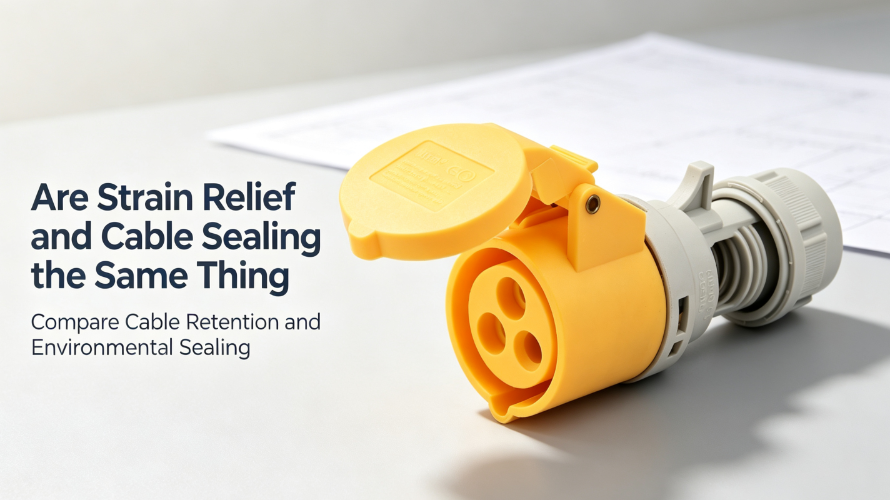
Industrial cables rarely stay still. Relocating equipment, routine handling, and routing choices all create stress, and repeated loading on one spot wears the jacket and can disturb the conductors.
If the plug does not retain the cable, force travels toward the terminals. The cable may shift inside the housing, insulation near the entry may be damaged, and contact may become unstable.
A cable that flexes at the same point near the housing concentrates stress there. A flexible support spreads that stress over a wider length, which matters for portable machinery and frequently repositioned equipment.
Motors, pumps, and mobile machines shake attached cables continuously. Stable retention keeps that motion from working at the entry and the wiring behind it.
Most designs combine retention, support, and controlled flexibility, creating a supported transition between a flexible cable and a rigid housing.
A clamp applies controlled pressure around the jacket. Too much pressure can damage the jacket, and too little lets the cable slide, so the clamp must suit the cable’s diameter and jacket material.
A molded or flexible boot lets the cable bend gradually instead of kinking at the housing edge.
The strain relief must seat securely in the housing. Dimensions, materials, and fixing method all affect how well forces are managed, so cable, retention parts, housing, and wiring should be treated as one assembly.
The cable entry is a possible path for moisture and dust, so a sealed housing alone is not enough. A Waterproof Industrial Plug needs suitable sealing parts, a cable of compatible dimensions, and careful assembly.
Strain relief supports this by keeping the cable steady, since repeated movement can shift sealing parts or open gaps around the jacket. It does not provide waterproofing on its own, and the sealing system still has to meet the required protection conditions.
Cable glands often combine retention and sealing. Depending on construction, they hold the cable, seal around the jacket, and form a controlled joint between cable and enclosure. Selection should consider the cable’s outer diameter, jacket material, installation method, and environment.
IP ratings describe resistance to solids and water under defined test conditions. They depend on the whole assembly, including the cable entry, housing joints, sealing rings, and mating connections.
| IP Rating | Protection Consideration |
|---|---|
| IP44 | Solid objects and water splashing |
| IP65 | Dust-tight, protected against water jets |
| IP66 | Dust-tight, protected against powerful water jets |
| IP67 | Dust-tight, temporary immersion |
| IP68 | Dust-tight, immersion under manufacturer-defined conditions |
The rating only holds when compatible cables and sealing parts are fitted correctly.
Design varies with cable type, equipment movement, and environment.
Appearance and electrical rating are only part of the picture.
Check outer diameter, jacket material, flexibility, construction, and the clamping range. A mismatched cable is hard to secure or may be crushed during installation.
Portable machinery needs flexible support, while fixed outdoor installations put more weight on sealing. Consider vibration, frequent cable movement, splashing, dust, outdoor temperature swings, and contact with other objects.
Housing should give suitable mechanical protection, and seals must stay compatible with the cable jacket and the exposure expected.
Mechanical protection never replaces electrical compatibility. Confirm voltage and current ratings, number of poles, earthing arrangement, plug and socket compatibility, and applicable safety requirements.
Continuous vibration and movement call for firm retention and sensible cable routing that avoids contact with moving parts.
Rain and dust call for an appropriate enclosure rating and a compatible sealing arrangement, with strain relief keeping the entry steady.
Portable tools are dragged, bent, and bumped. Cable support protects the entry during handling and relocation.
Food plants and washdown zones need attention to entry sealing, housing construction, and installation quality when choosing a Waterproof Industrial Plug.
A useful specification begins with the equipment and its surroundings. Cable diameter and jacket material, required retention structure, environmental exposure and IP needs, electrical ratings, and maintenance conditions should be settled together instead of treated as separate features.
Engineering and purchasing teams evaluating an Industrial Electrical Plug or Waterproof Industrial Plug are welcome to contact our team with their cable dimensions, installation conditions, electrical requirements, and waterproofing needs to discuss a suitable configuration.
 +86-577-62731897
 shireen@nante.com
 No.688 chezhan Road, Liushi town, Wenzhou, China
Copyright © 2024 Fly-Dragon Electrical Co., Ltd. All Rights Reserved.
 浙公网安备33038202003041号
 Privacy
Outdoor Socket Box Factory & Outdoor Electrical Distribution Panel Factory



 English
 Español
 Português
 Deutsch