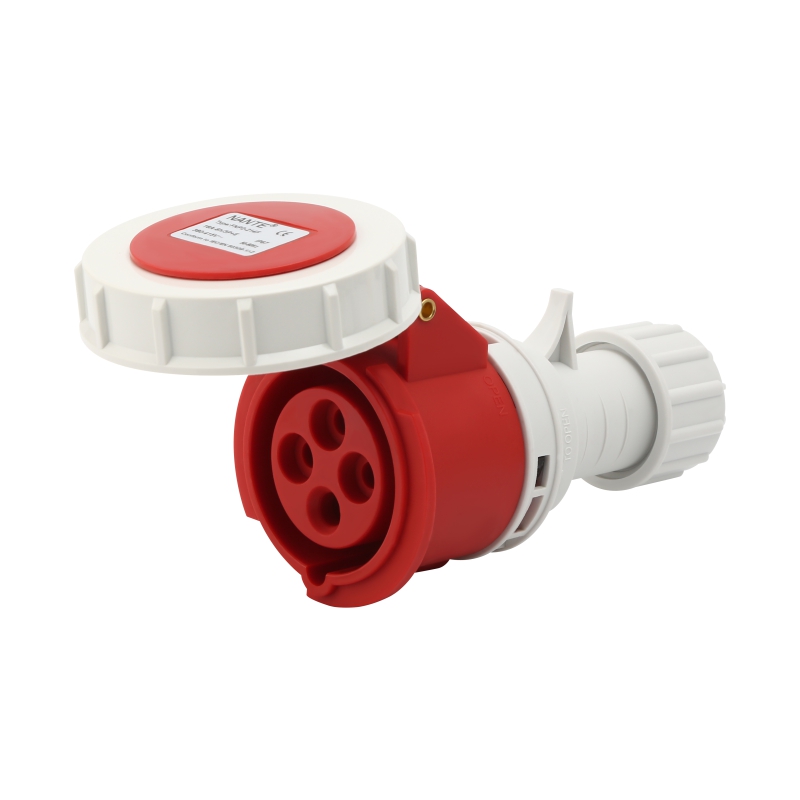
Industrial Electrical Socket Box: Structure, Components, and Applications
 Home / News / Industry News / Industrial Electrical Socket Box: Structure, Components, and Applications
 Industrial electrical socket box are not something people often notice, yet they sit quietly in many working spaces where power needs to stay organized. In factories, workshops, storage zones, and technical rooms, they act as fixed points for electricity access.
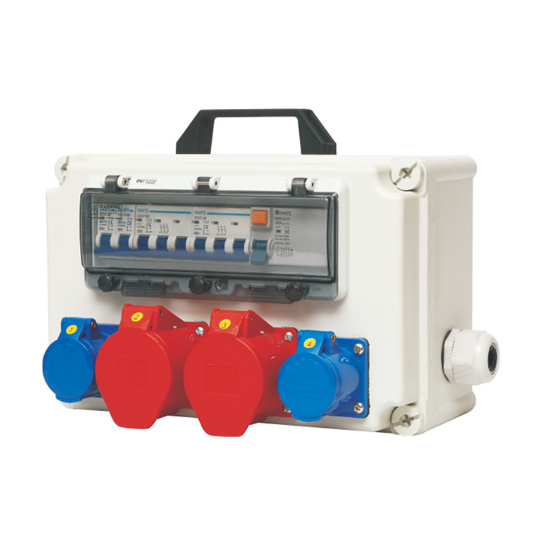
At first glance, the box looks like a simple enclosure fixed to a wall or panel. A closer look shows a layered structure inside. Each part has its own role. Some parts hold the shape. Some guide wiring. Some deal with safety separation. Everything is arranged in a limited space where movement still needs to stay controlled.
An industrial socket box works as a controlled connection point for electrical supply. It gathers wiring into a defined structure and provides a stable outlet point for equipment use.
In real working environments, power demand rarely stays in one fixed pattern. Machines may move positions. Work areas can be adjusted. Instead of spreading outlets everywhere, a socket box keeps things grouped in one organized point.
It is not only about convenience. It is also about keeping wiring from becoming scattered or exposed.
In practical use, it usually supports:
The idea is simple. Electricity stays available, but not messy.
Inside the box, the structure is arranged in layers rather than a single hollow space. Each layer supports a different function.
The outer part is the housing. It stays fixed into a wall or panel opening. Inside that, a support layout holds the working components in place.
Most designs can be understood in three simple zones:
These zones sit close together but are kept separated in function. That separation helps reduce pressure on wiring and keeps the internal layout more stable during long use.
The structure is usually compact, but it is not random. The internal space is divided with intention, even if it is not immediately visible.
Inside an industrial electrical socket box, several small parts work together. None of them looks complicated on its own, but together they form a stable system.
Common internal parts include:
They are placed in a way that keeps electrical flow separate from mechanical support.
Here is a simple breakdown:
| Component | What it does in practice |
|---|---|
| Housing body | Keeps everything enclosed and protected |
| Mounting frame | Holds the internal structure steady |
| Wiring terminals | Fix incoming wires in place |
| Conductive paths | Carry electricity through the system |
| Grounding parts | Provide a safety route for abnormal flow |
| Insulation barriers | Keep internal sections separated |
| Cable entry channels | Guide wires into the box safely |
The important thing here is not the complexity of each part, but how they are spaced and aligned inside a small enclosure.
Inside the box, the mounting frame is what keeps everything from shifting.
In real environments, plugs are inserted and removed many times. That movement creates pressure on internal parts. Without a stable frame, the internal structure would slowly loosen.
The mounting frame absorbs that movement. It holds the socket unit in position and keeps alignment steady with the wall or panel opening.
It also spreads mechanical force instead of letting it concentrate in one point. This helps reduce stress on wiring connections inside the box.
The wiring section is where external cables meet internal connection points. It is a small but very sensitive area.
Wires enter through a defined path, not randomly. Once inside, they are guided toward terminal points. These terminals hold the wires tightly so they do not shift during use.
The flow inside this area is usually like this:
Each connection is kept separate. That separation avoids interference between different lines.
Even a small looseness here can affect stability, so the structure is built to keep contact consistent rather than flexible.
Grounding is part of the safety layer inside the socket box. It does not take part in normal current flow, but it stays ready in the background.
Inside the structure, grounding components are placed slightly apart from main conductive paths. They are connected to a dedicated route that leads away from the active circuit.
When everything is normal, grounding stays inactive. But if something unusual happens in the system, it provides an alternative path for electrical flow.
It is a quiet structure, not often noticed, but it adds a layer of protection to the whole system.
Inside a socket box, different conductive parts sit very close together. Without separation, they could interfere with each other.
That is where insulation comes in.
Insulation is placed between terminals, around wiring paths, and along internal surfaces. It does not carry electricity. Instead, it blocks unwanted contact.
Its role includes:
Even though it is not a visible feature after installation, it plays a constant role in keeping the structure organized.
Cable entry is the point where external wiring enters the box. It looks simple, but it affects the whole internal setup.
If wires enter without guidance, they may bend too sharply or press against internal parts. Over time, that can create stress on connection points.
To avoid that, entry points are shaped to guide cables inward in a controlled direction.
They often include:
This part helps keep the transition from wall wiring to internal terminals smoother and more stable.
The outer housing is the part that people might see before installation is finished. Once the box is mounted, it becomes the main protective layer.
Its role is not only to cover internal parts. It also helps the box stay fixed inside a wall or panel.
It supports:
In industrial environments, this outer structure often faces repeated contact, so it needs to stay firm without affecting internal alignment.
Industrial electrical socket boxes are used in many working environments where electricity needs to be organized instead of scattered.
They are often found in:
In these places, power demand can change depending on activity. One area may need multiple devices at the same time, while another stays idle.
A socket box helps keep access points structured, so wiring does not become spread out or difficult to manage.
When everything is assembled, the socket box becomes a single system made of small connected parts.
The housing holds the shape. The mounting frame keeps it steady. Wiring terminals manage connections. Conductive paths move electricity. Grounding adds a safety route. Insulation keeps separation. Cable entry guides wiring into place.
Each part depends on the others in a simple way. If one section is not aligned properly, the rest of the system is affected.
During use, the system stays mostly still. Only the external interaction changes when a plug is inserted or removed. Inside, the structure is designed to remain steady with minimal movement.
That stability is what allows industrial socket boxes to keep working in environments where conditions are not always predictable.
 +86-577-62731897
 shireen@nante.com
 No.688 chezhan Road, Liushi town, Wenzhou, China
Copyright © 2024 Fly-Dragon Electrical Co., Ltd. All Rights Reserved.
 浙公网安备33038202003041号
 Privacy
Outdoor Socket Box Factory & Outdoor Electrical Distribution Panel Factory



 English
 Español
 Português
 Deutsch