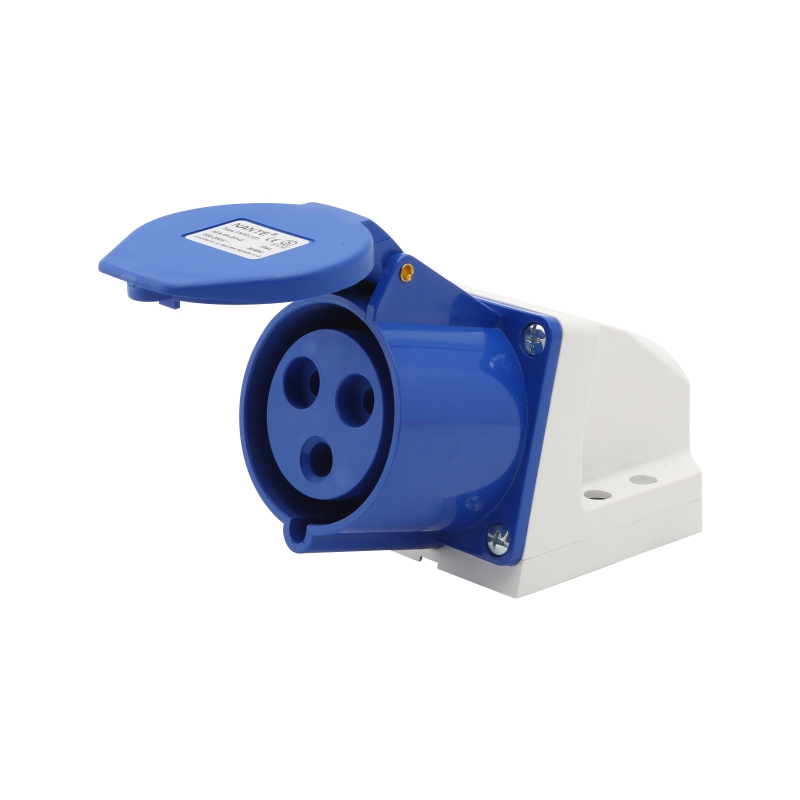
Outdoor Power Distribution Panel Improves Electrical Safety in Outdoor Installations
 Home / News / Industry News / Outdoor Power Distribution Panel Improves Electrical Safety in Outdoor Installations
 Outdoor electrical installations operate in a setting that never stays fully stable. One day the ground is dry, the next it may be damp. Dust moves with wind. Equipment positions change as work progresses. In this environment, electricity needs more than connection. It needs structure.
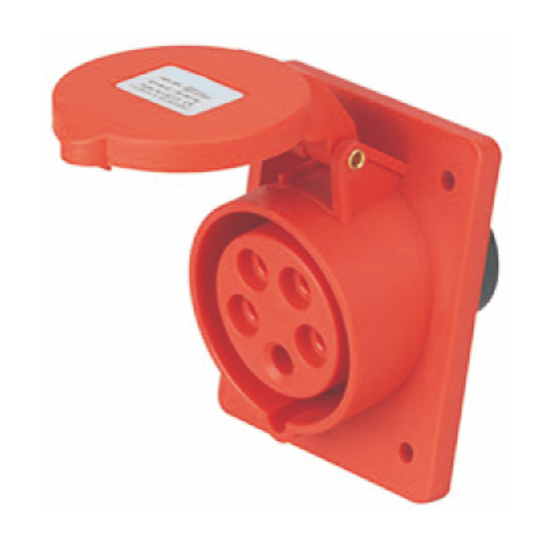
Outdoor power distribution panel is increasingly used to bring order into this environment. They do not change how electricity is generated or consumed. They change how it is organized, protected, and directed across an outdoor site.
The idea is simple. When power is controlled from a clear point, the rest of the system becomes easier to manage.
Outdoor environments introduce conditions that are not present in enclosed spaces. Moisture is one of the common factors. It does not need to be heavy rain to affect systems. Even light dampness over time can influence how electrical components behave.
Dust is another constant presence. It can settle on surfaces, enter small gaps, and slowly affect connection stability. Unlike indoor environments, outdoor areas do not offer full protection from these elements.
Movement also plays a role. Outdoor projects are not fixed. Equipment is moved, added, or removed as work develops. Electrical connections follow these changes, which creates a shifting network rather than a fixed one.
Each of these factors increases the need for control. Without a structured system, small changes in the environment can find to larger complications in power management.
Outdoor power boxes bring a big change by putting all power access in one central spot. Instead of random plug points spread all over the work area, every power line runs out from this main hub.
Workers use this central unit to map out all site wiring. Power can then be routed to different work zones in a neat, planned way.
If power connections are scattered all over the site with no order, it's tough to tell where power comes from or which tools draw current. Having one central hub clears up all that confusion.
It also cuts down on tangled, overlapping wires. With fewer loose, unplanned cable runs, there are far fewer hidden spots where faults can pop up out of sight.
After setting up this centralized layout, the whole site becomes easier to manage. Anyone can quickly trace how power moves across the workspace.
Outdoor electrical systems do not fail because of a single factor. They are affected by a combination of small environmental pressures.
Moisture can change surface behavior. Dust can reduce contact quality. Temperature shifts can affect material response. None of these factors act alone, but together they influence stability.
Worksite movement adds another layer. Cables may be extended across paths. Temporary setups are built and removed repeatedly. Each change increases complexity.
Outdoor power distribution panels help reduce how exposed these variables are. Instead of managing multiple open connection points, the system brings them into one organized structure.
This does not remove environmental pressure, but it reduces how widely that pressure is spread.
Electrical risk in outdoor environments often comes from unclear connections. When power lines are spread across a large area, it becomes harder to identify how systems are linked.
Structured distribution reduces this spread. Power enters a controlled point, then exits through organized pathways.
This structure helps reduce accidental contact. Workers are less likely to interact with exposed or unclear connections during daily movement.
It also supports faster identification of issues. When a problem occurs, the source area is easier to locate because the system is not scattered.
Clear structure does not eliminate risk, but it reduces confusion, which is often a key factor in outdoor electrical incidents.
Outdoor worksites are rarely static. A layout at the beginning of a project may look very different after several stages of work. Paths shift. Equipment moves. New zones are created.
Electrical systems need to adapt to this change without becoming disorganized.
Power distribution panels provide a stable reference point. Instead of rebuilding connections across the entire site, adjustments are made from a central location.
New equipment can be connected through existing distribution paths. Older connections can be removed without affecting the whole system.
This flexibility helps maintain order even when the physical layout is changing around it.
Outdoor installations often support multiple devices at the same time. Lighting, tools, and machinery may all draw power from a shared system.
When distribution is not structured, demand can become uneven. Some lines may carry more load than others, depending on how connections are arranged.
Outdoor power distribution panels help organize this flow. Power is divided into controlled output paths rather than scattered extensions.
This makes usage more balanced across the system. It does not eliminate variation in demand, but it prevents uncontrolled concentration in one area.
Over time, this supports more stable electrical behavior across the site.
Scattered vs Structured Outdoor Electrical Setup
| Aspect | Scattered Connections | Distribution Panel System |
|---|---|---|
| Power organization | Dispersed and uneven | Centralized and controlled |
| Safety visibility | Hard to trace paths | Clear connection structure |
| Environmental exposure | Multiple open points | Reduced exposed distribution |
| Worksite changes | Difficult to manage | Easier adjustment process |
| Maintenance effort | Time-consuming | More direct inspection path |
This comparison shows how organization changes not just safety, but also daily management effort.
Visibility in outdoor electrical systems is not only about seeing cables. It is about understanding structure.
When connections are scattered, it becomes difficult to understand how power flows across a site. Even small adjustments can require time to trace and verify.
A distribution panel creates a defined point of visibility. All main connections are grouped in one area.
This helps reduce time spent searching for connection paths. It also supports clearer communication between workers managing different parts of the site.
Better visibility leads to fewer misunderstandings during setup and maintenance.
Most outdoor jobs run on temporary power setups. These power layouts shift regularly as work stages move forward.
Temporary wiring isn't basic by any means. It actually gets rearranged far more often than permanent fixed electrical systems.
Outdoor distribution panels are built to be reused over and over. Crews can plug in extra lines or take connections away without tearing apart the whole power setup.
No matter how much the site layout shifts, power stays steady and orderly. The panel stays as one fixed central point amid all the moving site equipment.
If there's no clear central structure for site power, wiring gets strung out randomly across the ground. Different tools hook up through tangled, indirect cable runs.
The system grows messy and hard to keep track of as more gear gets added.
When something shorts out or loses power, tracking down the fault takes much longer. There's no single central hub to trace each circuit easily.
Outdoor distribution panels fix this messy expansion by giving the wiring a clear, organized base.
Instead of wires spreading out without any order, all power connections branch out neatly from the structured panel core.
Outdoor worksites often involve multiple teams working in parallel. Coordination depends on predictable access to resources, including electricity.
When power is organized, teams can plan their work with fewer interruptions. Equipment usage becomes easier to schedule because power availability is clearer.
This reduces waiting time between tasks. It also supports smoother transitions between different stages of work.
Electrical structure becomes part of overall site coordination, not just a technical detail.
Safety and efficiency are closely linked in outdoor installations. When systems are easier to understand and manage, fewer delays occur during daily operations.
Outdoor power distribution panels help reduce uncertainty in electrical handling. This allows more time to be spent on actual work rather than system correction.
Over time, fewer interruptions create a more stable working rhythm.
Efficiency here is not about speed alone. It is about reducing disruption across repeated tasks.
What is an outdoor power distribution panel used for?
It is used to organize and distribute electrical power safely across outdoor work environments.
Why is it important for safety?
It reduces scattered connections and creates a clear structure for power flow.
Can it be used in changing site layouts?
Yes, it supports flexible adjustments as worksite conditions change.
How does it improve organization?
It centralizes electrical connections into one controlled point.
Does it help with maintenance?
Yes, it makes inspection and troubleshooting easier by grouping connections.
Is it suitable for temporary installations?
Yes, it is commonly used in temporary outdoor electrical setups.
Does it reduce electrical complexity?
It reduces complexity by replacing scattered wiring with structured distribution.
 +86-577-62731897
 shireen@nante.com
 No.688 chezhan Road, Liushi town, Wenzhou, China
Copyright © 2024 Fly-Dragon Electrical Co., Ltd. All Rights Reserved.
 浙公网安备33038202003041号
 Privacy
Outdoor Socket Box Factory & Outdoor Electrical Distribution Panel Factory



 English
 Español
 Português
 Deutsch