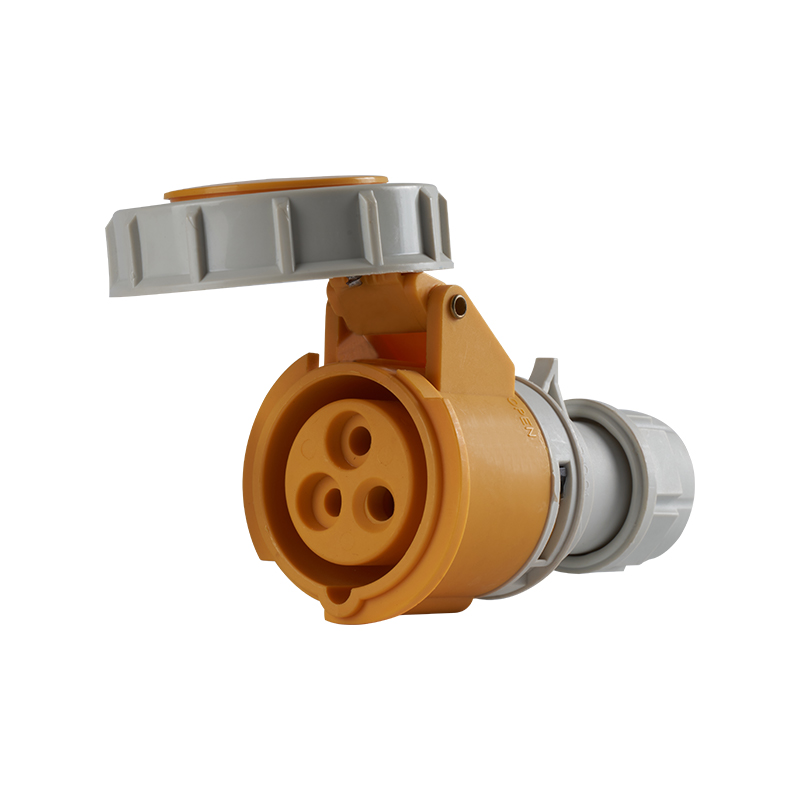
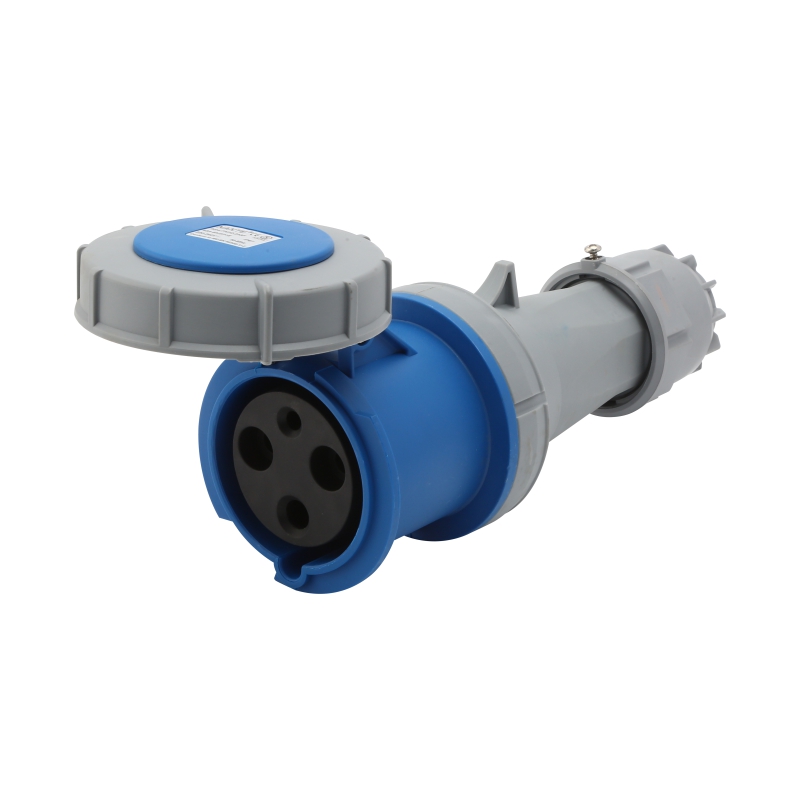
What Causes Contact Wear in an Industrial Electrical Plug
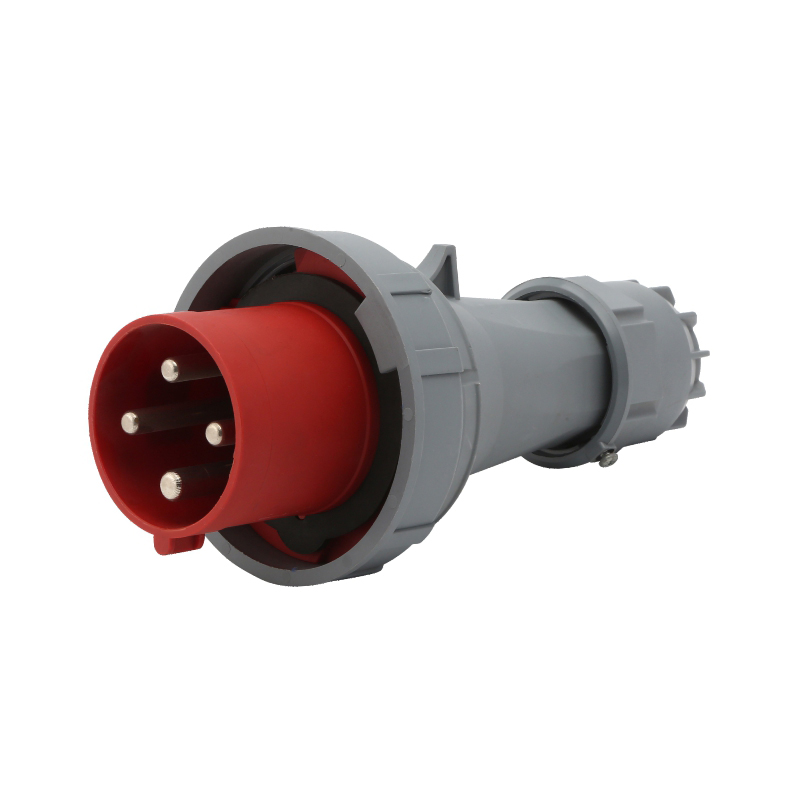
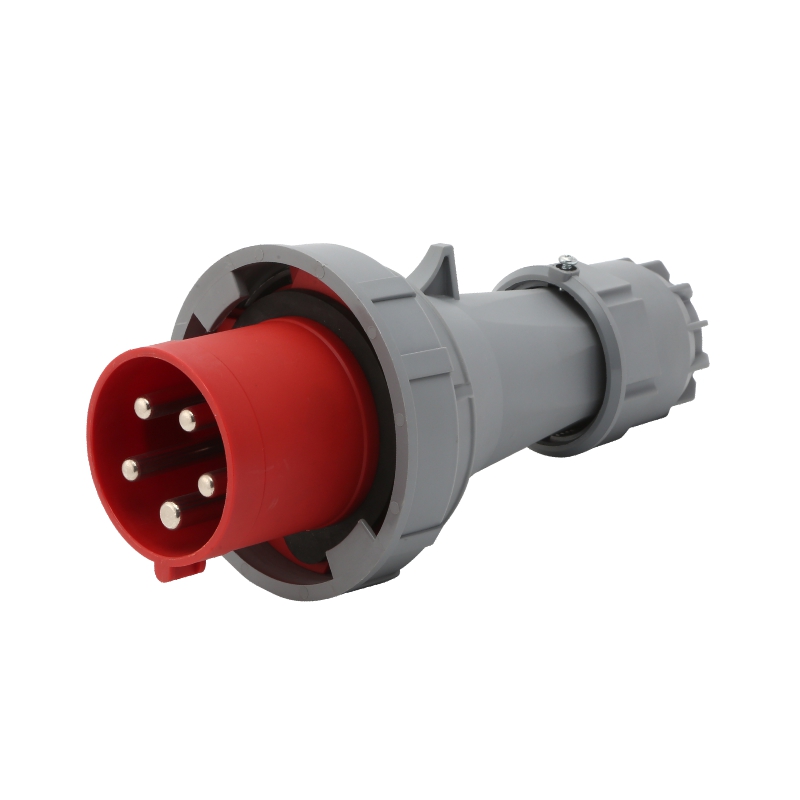
A conveyor motor is unplugged for cleaning twice a day, a washdown pump sits in humid air all week, and a welding cart rolls between bays with its plug still seated. Each connection works until the contacts inside start to deteriorate. An Industrial Electrical Plug has to hold stable contact through repeated mating, vibration, and changing surroundings, while friction, arcing, oxidation, and moisture slowly wear the contact parts. In damp or demanding locations, a Waterproof Industrial Plug can limit the environmental exposure that speeds this process.
Knowing how wear develops helps maintenance teams keep power connections steady. It also helps buyers match a plug to the real conditions of a site rather than to a catalog description.
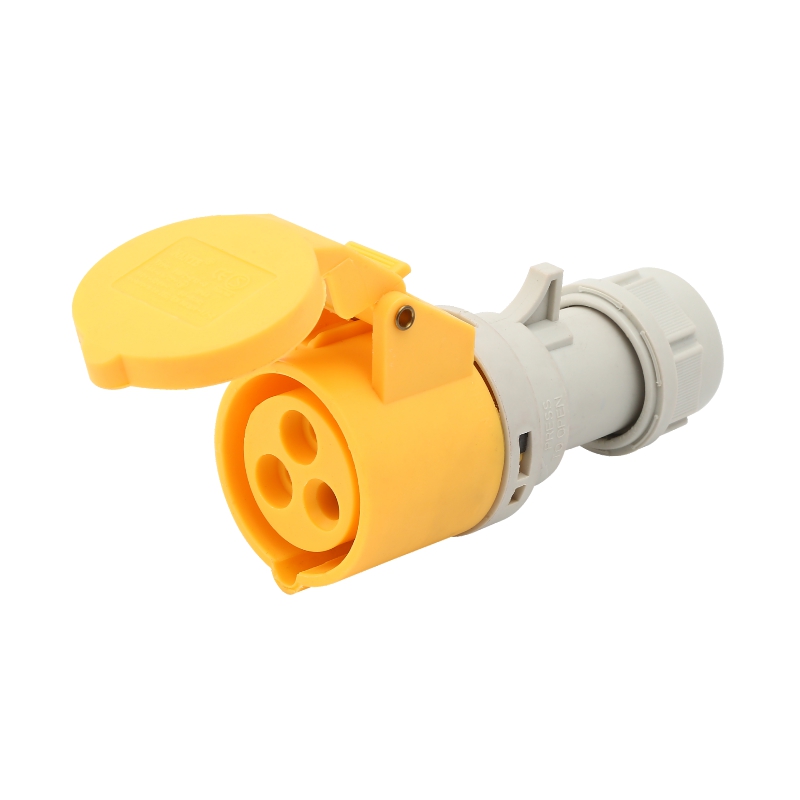
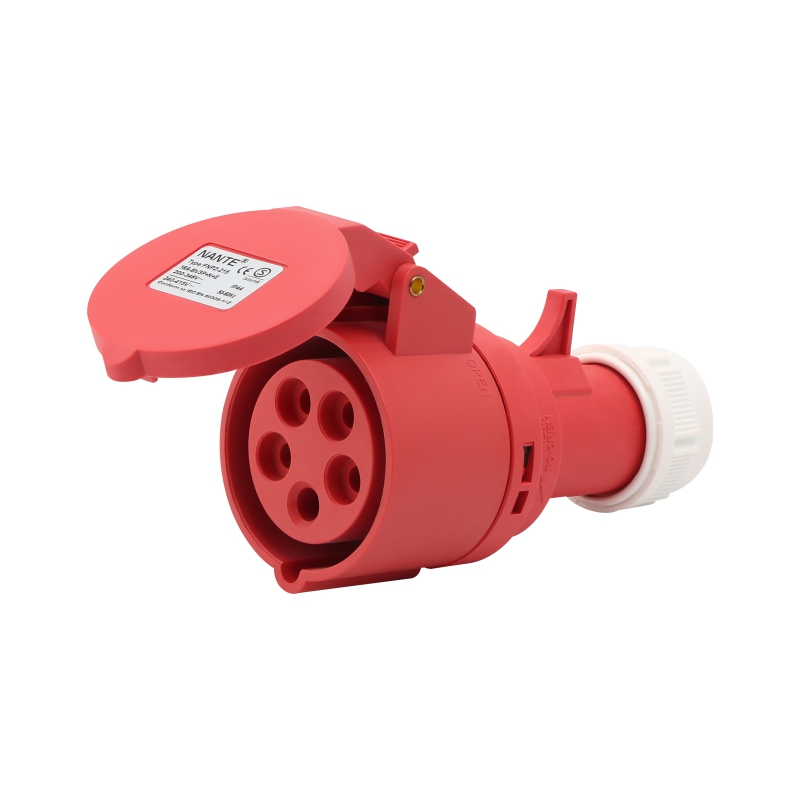
Power passes through direct contact between conductive parts. Male pins enter female socket contacts, and the engaged surfaces form the electrical path. Four design features shape the quality of that path:
Each insertion creates a sliding movement between pin and socket. After many cycles, fine scratches, plating loss, and shifts in contact force can appear, particularly when the plug is pushed in at an angle or handled roughly.
Inserting at an angle, pulling out without alignment, forcing a mismatched plug and socket, or leaving damaged contacts in service all increase rubbing. Once the plating thins, the metal underneath meets air and moisture directly, and corrosion follows.
Breaking a circuit under load can draw an arc between separating contacts. The heat leaves burn marks, pitting, and lost material, and contact resistance rises. A plug that is not built to break load should only be disconnected after the circuit has been isolated.
Humid air, condensation, salty moisture, chemical vapors, cleaning agents, and oily dust all attack metal surfaces. A plug can look sound from the outside while the contacts inside have already degraded.
Motors, pumps, and conveyors cause tiny movements between contacts that are fully inserted. The movement slowly wears coatings and produces fine debris, which encourages further damage once moisture is present. Secure mounting, cable support, and reliable locking reduce it.
Heat, repeated loading, or damaged springs weaken the grip of socket contacts. The result can be a smaller contact area, unstable resistance, local heating, and intermittent power. A loose fit is not a simple tightening job, and damaged contacts usually need replacing.
| Operating Condition | Possible Effect on Contacts | Practical Concern |
|---|---|---|
| Frequent insertion | Friction and coating wear | Lower contact quality |
| Arcing | Burning and pitting | Unstable connection |
| Moisture | Oxidation and corrosion | Higher resistance |
| Vibration | Repeated surface movement | Gradual deterioration |
| Dust | Deposits on surfaces | Poor engagement |
| Weak contact pressure | Inconsistent contact | Local heating |
Scratched, oxidized, or dirty surfaces conduct through fewer effective points, so contact resistance climbs. Current passing through that higher resistance produces heat at the joint, and the heat speeds oxidation, which raises resistance again. Warmth around a plug is therefore a signal worth acting on.
Intermittent contact may appear as unexpected shutdowns or erratic behavior that seems unrelated to the power connection. On an automated line it can disturb motors and control equipment. Troubleshooting should include the plug and socket, not only the connected machine.
During a safe inspection, look for:
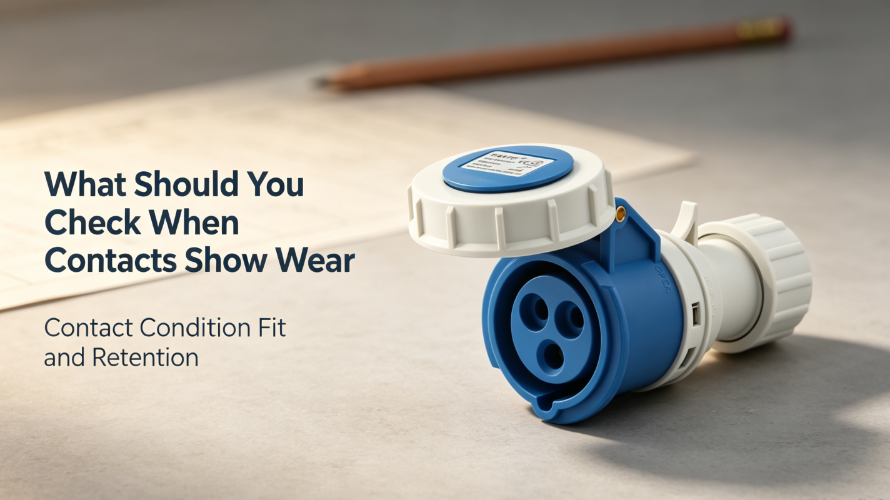
Operational clues include heat near the connection, sudden power loss, a plug that sits loosely, and staining around the socket opening. A sound housing does not prove the contacts are sound, so visual checks should be paired with suitable electrical testing. If overheating, burning, or intermittent power appears, isolate the circuit where it is safe to do so and call qualified personnel. Reconnecting a damaged plug again and again to see whether the fault clears is not advisable.
Wear cannot be removed entirely, but steady habits reduce it.
Align before insertion, avoid twisting or forcing, grip the plug body instead of the cable, follow the locking instructions, and isolate the supply before disconnecting when the design requires it.
Isolate the connection first, check accessible surfaces for deposits or corrosion, and use only manufacturer-approved cleaners. Abrasive tools strip plating, and cleaned parts should dry fully before reconnection. Cleaning should never be used to hide serious corrosion, pitting, or deformation.
Confirm that pins are aligned, socket contacts show no deformation, locks engage, and cable glands and strain relief remain secure.
A worn contact may still conduct while quietly getting worse. Replacements should match the manufacturer’s specifications, since improvised bending or aggressive polishing changes contact geometry.
A plug that suits a clean indoor workshop may struggle where moisture, dust, vibration, or frequent mating are present. When evaluating an Industrial Electrical Plug, consider the conductivity of the contact material, its resistance to oxidation, the durability of the surface finish, the elasticity of the socket structure, and how well the mating parts fit together.
A Waterproof Industrial Plug relies on sealing to limit moisture and contaminants reaching the contacts, provided it is used within its stated protection conditions. It does not remove friction, arcing, vibration, or pressure loss, so contact design still matters.
| Selection Factor | What to Examine |
|---|---|
| Ingress protection | Suitability for expected water and dust |
| Sealing structure | Condition and fit of gaskets |
| Contact materials | Resistance to oxidation and corrosion |
| Housing design | Fit for the installation environment |
| Cable entry | Sealing and cable retention |
| Compatibility | Matching plug and socket specifications |
Application changes the priorities. Workshops call for mechanical durability and resistance to contamination. Outdoor sites depend on sealing performance. Food plants need moisture protection and tolerance of frequent cleaning. Motor and pump connections require attention to vibration and cable support, and mobile equipment needs dependable locking for repeated mating.
Useful details include voltage and current, plug and socket compatibility, contact material, environmental exposure, sealing needs, and the installation and cable connection method. With that information, it becomes clear whether a standard plug or a waterproof configuration suits the site.
Teams dealing with loose connections, contact corrosion, or recurring wear are welcome to contact our team with their operating environment, electrical requirements, and connection type to discuss a suitable Industrial Electrical Plug or Waterproof Industrial Plug.
 +86-577-62731897
 shireen@nante.com
 No.688 chezhan Road, Liushi town, Wenzhou, China
Copyright © 2024 Fly-Dragon Electrical Co., Ltd. All Rights Reserved.
 浙公网安备33038202003041号
 Privacy
Outdoor Socket Box Factory & Outdoor Electrical Distribution Panel Factory



 English
 Español
 Português
 Deutsch