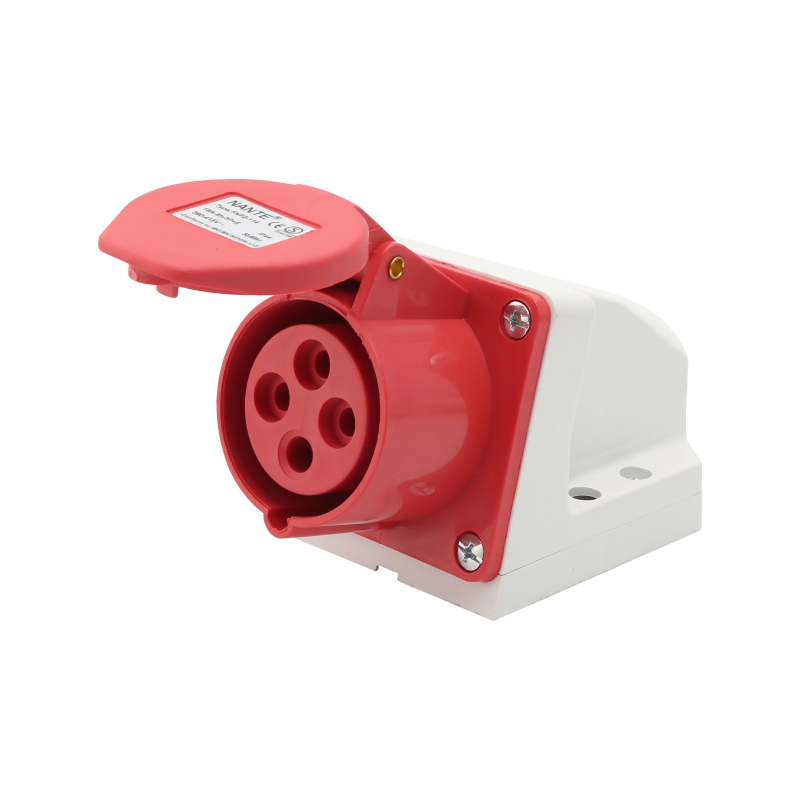
What Is an Angled Panel Mounted Industrial Socket and How Does It Work
 Home / News / Industry News / What Is an Angled Panel Mounted Industrial Socket and How Does It Work
 Industrial power systems rely on components that can handle repeated use, varied environments, and constant demand. Among these components, angled panel mounted industrial sockets are gaining attention for their practical design and functional flexibility. They are not complex in appearance, yet they play an important role in how electrical connections are accessed and managed in equipment panels.
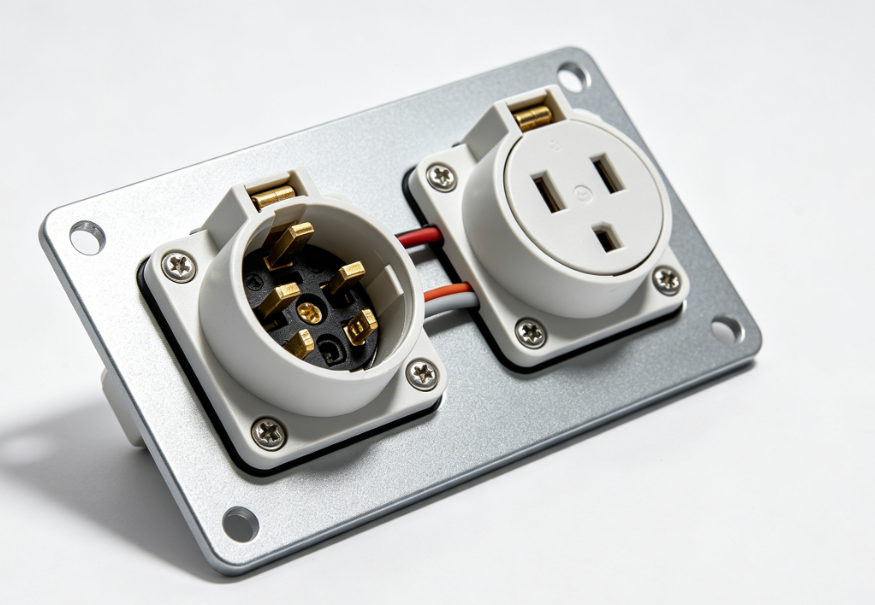
These sockets are installed directly into panels, control boxes, or machinery surfaces. The angled structure changes how users interact with the connection point. Instead of a flat entry, the interface is tilted, offering a more natural approach to plugging and unplugging.This design choice may seem small, but it influences usability, space management, and workflow efficiency in many industrial environments.
An angled panel mounted industrial socket is a fixed electrical connection point designed to be integrated into a flat surface, with the connection face set at an angle. This angle is the key distinction from traditional straight-mounted sockets.
The structure typically includes a housing, internal contact points, and a mounting system that secures it to a panel. Once installed, it becomes part of the equipment rather than a separate accessory.
The angled orientation allows cables to connect without bending sharply. This reduces strain on both the socket and the attached cable. It also makes the connection point easier to see and reach.
In many setups, this design helps align cables in a more organized direction, especially in tight or crowded control areas.
Industrial environments often involve limited space and frequent interaction with equipment. Straight sockets can sometimes create awkward cable directions or require more clearance around the connection point.
The angled design addresses this by shifting the direction of the plug. Instead of extending straight outward, the cable exits at a slanted angle. This subtle change improves how space is used around panels.
It also reduces interference between adjacent cables. In systems with multiple connections, spacing becomes important. Angled sockets help prevent cables from overlapping or pressing against each other.The result is a cleaner layout that supports easier maintenance and inspection.
The working principle is straightforward. Electrical current passes through internal contact points inside the socket. When a compatible plug is inserted, the connection is completed, allowing power to flow.
The angled structure does not change the electrical function. Instead, it modifies the physical access point.During use, the user approaches the socket from a more natural angle. The plug aligns with the tilted face, reducing awkward wrist movement or forced alignment.
Once inserted, the connection remains stable within the housing. The angled position can also help reduce accidental disconnection caused by straight-line pulling or vibration.
Cable direction is often overlooked in system design. Yet it has a direct impact on safety and organization. When cables extend straight out from a panel, they may block other components or create tension points.
Angled panel mounted sockets guide cables downward or sideways depending on installation orientation. This controlled direction helps manage cable paths more efficiently.
In multi-socket panels, this becomes even more noticeable. Each connection can be oriented in a way that reduces crossing lines and tangled layouts.
A simple comparison helps illustrate the difference:
| Feature | Angled Panel Socket | Straight Panel Socket |
|---|---|---|
| Cable Direction Control | Guided at an angle | Straight outward |
| Panel Space Usage | More compact layout | May require extra clearance |
| Cable Strain | Reduced bending pressure | Higher bending points |
| Visual Organization | Cleaner alignment | Can appear clustered |
This structure supports both functionality and visual order.
Control panels and machine interfaces often contain multiple connection points. Each socket must be accessible without interfering with others.
Angled panel mounted sockets help achieve this balance. Their tilted orientation allows users to reach connections without blocking adjacent ports.
In maintenance situations, this accessibility becomes important. Technicians can unplug or inspect connections with less obstruction. This reduces downtime and simplifies routine checks.The socket also blends into the panel surface. It does not extend outward excessively, which helps maintain a more compact equipment profile.
Interaction with industrial sockets is not only about power transfer. It is also about ease of use. The angle of entry changes how the user approaches the connection.Instead of pushing directly forward, the plug meets the socket at a more natural hand position. This reduces awkward force and improves alignment accuracy.
In environments where gloves are used, this can make a noticeable difference. A clearer angle helps guide the plug into place without repeated adjustments.Over time, this reduces wear on both the plug and socket interface.
Mechanical stress often builds up in electrical connections due to repeated use. Straight sockets may experience direct pulling force along a single axis.
Angled sockets distribute this force differently. The cable naturally follows a slanted path, which reduces direct strain on the connection point.
This can help maintain stability in systems that experience vibration or frequent movement.It also reduces the chance of loosening over time. A more natural cable path means fewer sharp bends, which often contribute to wear.
These sockets appear in a variety of environments where organized power access is needed. Their use is not limited to one sector.
They are often found in:
In each case, the angled design supports better space management and easier handling.
Installation involves fitting the socket into a prepared opening on a panel surface. The angled design requires careful positioning to ensure the direction aligns with cable routing plans.Once placed, the socket is secured so it remains stable during use. The panel acts as both support and structure, holding the socket in place.
Wiring connections are made internally, linking the socket to the broader electrical system. After installation, the angled face remains visible and accessible.The process is generally straightforward, but layout planning matters. The angle must match the intended cable direction for results.
Before using angled panel mounted sockets, layout planning is important. The direction of the angle affects how cables move across the panel.Spacing between sockets should also be considered. While the angled design helps reduce crowding, poor planning can still Find to congestion.Another factor is accessibility. Sockets should be placed where users can reach them without obstruction from other components.Environmental conditions may also influence placement. Areas with frequent movement or vibration may benefit more from angled positioning.
Long-term performance often depends on small design choices. Angled panel mounted sockets support durability by reducing stress on connection points and cables.
They also help maintain a cleaner layout over time. A well-organized panel is easier to inspect and maintain.
When systems remain organized, troubleshooting becomes faster. Connections are easier to trace, and wear is easier to identify.
This contributes to a more stable operational environment without requiring frequent structural changes.
Angled panel mounted industrial sockets may appear simple, but their design influences how electrical systems are used and maintained. Through controlled cable direction, improved access, and reduced mechanical stress, they support more organized and manageable panel layouts across a wide range of industrial environments.
 +86-577-62731897
 shireen@nante.com
 No.688 chezhan Road, Liushi town, Wenzhou, China
Copyright © 2024 Fly-Dragon Electrical Co., Ltd. All Rights Reserved.
 浙公网安备33038202003041号
 Privacy
Outdoor Socket Box Factory & Outdoor Electrical Distribution Panel Factory



 English
 Español
 Português
 Deutsch