Could an Electrical Socket Box Make Your Next Installation Safer
Choosing the right enclosure for wiring and fixtures is a routine decision on construction sites and in renovation projects, yet it can have a major effect on safety, accessibility and long-term maintenance. An Electrical Socket Box that fits its environment and use case helps avoid downtime, reduces risks during service work, and supports clearer inspection routines. Contractors, electricians and facility managers increasingly treat the box selection as a design decision rather than a last-minute choice.
An electrical box is more than a container: it protects connections, provides mechanical support for devices, and can serve as part of a grounding path when the situation requires it. A mismatch between box type and site conditions can guide to premature corrosion, loose connections or difficulties in future upgrades.
Experienced installers emphasize that thinking through where and how a box will be used early in the design phase avoids surprises during final assembly and inspections.
Material selection is a primary consideration because it determines how the box will respond to temperature, moisture and mechanical stress.
Matching material to the installation prevents unnecessary replacements and supports a predictable maintenance schedule.
Where a box is installed dictates its protective features and mounting style. A careful site review will reveal whether a standard solution is sufficient or a specialized enclosure is needed.
Visualizing both everyday use and exceptional events — such as accidental impacts — helps teams select a box that will perform under real conditions.
Underestimating how much space is needed for terminations and future additions is a common pitfall. Crowded interiors complicate wiring, make inspections harder and can guide to unsafe practices.
A practical allowance for space improves safety and long-term flexibility.
How the box mounts and what devices it must support are central to a tidy, durable installation.
These considerations ensure the installation meets functional needs and remains user-friendly for future work.
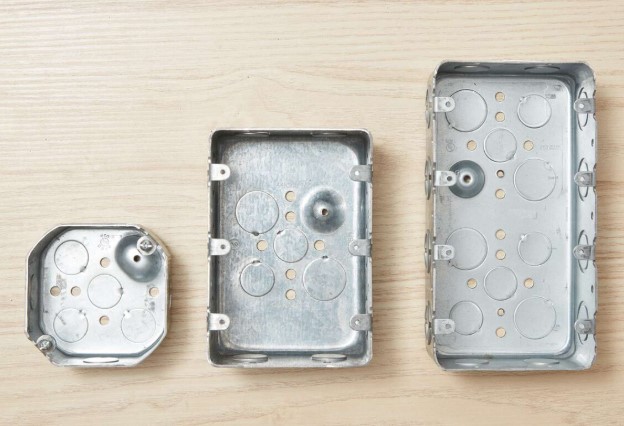
Local rules and accepted practice should guide the final selection. Compliance with codes protects users and simplifies inspections.
Clear documentation and labeling enhance safety and make routine maintenance more predictable.
| Installation context | Typical box choice | Quick tip |
|---|---|---|
| Standard interior wiring | Lightweight non-metal box | Ensure device fit and allow room for connections |
| Commercial or industrial area | Metal box with grounding provision | Provide secure mounting and inspection access |
| Outdoor or damp location | Weather-resistant enclosure | Use sealed covers and protected entry points |
| High-traffic or mechanical zones | Reinforced box with sturdy fastening | Mount to resist impact and vibration |
This table is intended as a concise guide to help managers and tradespeople pair site conditions with an appropriate enclosure strategy.
Before ordering enclosures, teams can reduce downstream issues by following a straightforward process:
A short planning phase avoids common retrofit headaches and supports smoother handoffs between installation and operations teams.
Choosing an Electrical Socket Box that suits the environment and the devices it will host reduces surprises and preserves uptime. The right enclosure simplifies routine checks, allows clear identification of circuits and makes it easier to manage spare parts or replacements. Teams that view the box as part of the system — not just a cheap container — see gains in reliability and fewer service interruptions.For more information about industrial solutions, you can visit nante.
 +86-577-62731897
 shireen@nante.com
 No.688 chezhan Road, Liushi town, Wenzhou, China
Copyright © 2024 Fly-Dragon Electrical Co., Ltd. All Rights Reserved.
 浙公网安备33038202003041号
 Privacy
Outdoor Socket Box Factory & Outdoor Electrical Distribution Panel Factory



 English
 Español
 Português
 Deutsch