Could Portable Circuit Breaker Boxes Improve Power Organization on Temporary Worksites
 Home / News / Industry News / Could Portable Circuit Breaker Boxes Improve Power Organization on Temporary Worksites
 Temporary worksites rarely stay the same for very long.
A construction area may change as work moves from one section to another. A maintenance project may require temporary equipment in different locations. Outdoor work can also bring portable tools, lighting, pumps, and other electrical devices into the same working area.
All of these activities need access to power.
The challenge is not simply getting electricity to the site. It is also about organizing where power is available, how different devices are connected, and how workers can manage the electrical setup during daily operations.
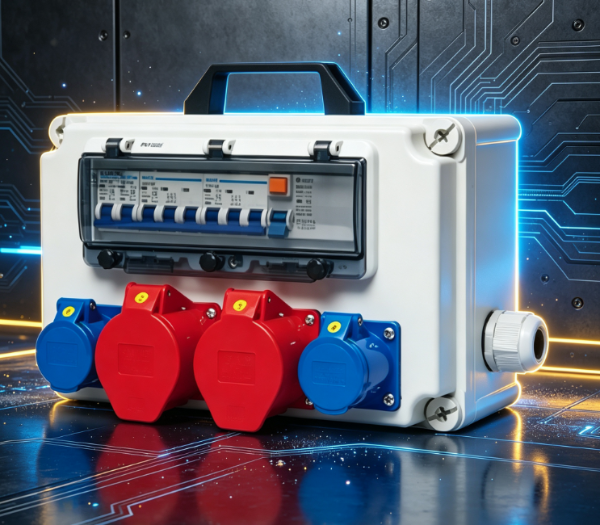
This is where Portable Circuit Breaker Box can have a practical role.
A portable box can provide a defined location for electrical connections and circuit protection within a temporary worksite. Instead of treating cables and electrical equipment as one large network spread across the site, workers can create more understandable power areas.
This approach can make temporary electrical arrangements easier to manage.
The value of a Portable Circuit Breaker Box is therefore closely connected to organization. It is not just about moving an electrical box from one place to another. Its portability can allow the power arrangement to adapt as the worksite changes.
Temporary worksites can become busy very quickly.
Workers may use different tools at the same time. Lighting may be required in one area while equipment operates somewhere else. Temporary facilities may also need electrical connections.
When these connections are not well organized, the site can become difficult to manage.
Cables may travel across working areas. Workers may not immediately know which connection serves which part of the site. Equipment can also be moved without considering how its power connection fits into the wider arrangement.
Power organization helps create a clearer structure.
A temporary worksite can be divided into practical areas based on how the space is being used. Electrical connections can then be considered according to these areas.
For example, a site may include:
| Worksite Area | Possible Electrical Needs |
|---|---|
| Main work area | Portable tools and equipment |
| Storage area | Lighting and temporary equipment |
| Access area | Temporary lighting and site facilities |
| Maintenance area | Portable service equipment |
| Outdoor work zone | Tools, lighting, or temporary machinery |
| Support area | Office or communication equipment |
The exact requirements will vary from one project to another.
The important point is that electrical access should follow the worksite layout.
A Portable Circuit Breaker Box can support this way of thinking by providing a recognizable point for power connections and circuit protection.
A temporary worksite often needs power in more than one location.
If every connection is routed from a single point, cables may need to travel long distances. This can make the installation less convenient and may interfere with other site activities.
Portable distribution equipment offers another approach.
A box can be positioned where temporary power access is needed, subject to the site's electrical plan and applicable requirements. This can create a more defined connection area.
The result is easier to understand.
Instead of having electrical connections spread randomly around a worksite, workers can associate certain equipment with a specific power point.
This can help with daily work.
When a tool needs to be moved, workers can consider how the new position affects its electrical connection. When a work area is no longer needed, its temporary power arrangement can also be reviewed without changing the entire site.
This flexibility is particularly relevant to construction and maintenance projects.
The worksite itself may change as tasks are completed. A power arrangement that works well at one stage may not make sense later.
Portable equipment can make it easier to adjust the electrical layout along with the physical layout.
Portability is an important part of the concept.
Permanent electrical equipment is usually installed as part of a fixed building or facility. Temporary worksites have different requirements.
The work may move.
A construction crew may begin in one section and later continue somewhere else. A maintenance team may need temporary power close to a particular piece of equipment. Outdoor projects can also require electrical access in areas that are not connected to a permanent workplace infrastructure.
A portable circuit breaker box can move with the temporary setup when the application allows it.
This can reduce the need to create a completely new electrical arrangement every time the worksite changes.
The benefit is not simply physical mobility.
Portability can also encourage more flexible planning.
Workers can think about power according to the current stage of the project. Instead of forcing every activity to operate around a fixed electrical point, temporary power access can be considered as part of the worksite layout.
That can be useful when project conditions change frequently.
It also makes the electrical setup easier to view as temporary infrastructure rather than a permanent installation.
Power organization is closely connected with electrical protection.
A temporary worksite may contain several electrical devices operating in different areas. If one area develops an electrical problem, workers need a clear way to understand and manage the affected part of the setup.
A circuit breaker box can provide a defined location for circuit protection.
This does not mean the box alone makes a temporary electrical system safe. The complete installation needs to be planned and used in accordance with applicable electrical requirements.
However, having protection arranged within a recognizable enclosure can make the system easier to understand.
Workers can identify where certain electrical functions are managed. This can support clearer communication when maintenance or inspection is required.
Organization also matters when equipment is added.
A temporary worksite can change during the day. Additional tools may be brought in. Some equipment may be removed. A clear electrical structure can help workers consider where new connections should be made.
Rather than adding connections wherever space is available, the existing arrangement can provide a framework for decision-making.
This is where power organization becomes more than simple convenience.
A structured setup can support better awareness of how electricity is being distributed across the work area.
Portable circuit breaker boxes can be relevant to many temporary environments.
Construction sites are an obvious example. Tools, lighting, temporary facilities, and other equipment may require power before permanent electrical systems are available.
Maintenance projects can have similar needs.
A building, facility, or industrial area may require temporary equipment while certain work is being completed. The electrical arrangement may need to change as the project moves through different stages.
Outdoor worksites can also benefit from organized temporary power.
Landscaping projects, temporary installations, infrastructure work, and other outdoor activities may operate in locations where permanent electrical access is limited or unavailable.
Event-related work can also involve temporary electrical arrangements.
Temporary structures, service areas, displays, and supporting equipment may need electrical connections for a limited period.
Different applications have different requirements. A Portable Circuit Breaker Box should therefore be selected according to the actual work environment and electrical needs rather than simply because it is portable.
The surrounding conditions, intended use, installation method, and applicable safety requirements all matter.
A worksite is easier to manage when workers can understand how its different parts are connected.
Electrical equipment is one part of that structure.
When power connections are clearly organized, workers may find it easier to identify where tools and temporary equipment should be connected. This can also make it easier to communicate with other members of the team.
Imagine a worksite where several crews are active at the same time.
One group may be working on structural tasks. Another may be handling maintenance. A separate team may be responsible for lighting or temporary facilities.
Each group may have different electrical needs.
A clearly arranged power distribution system can help prevent the entire site from becoming one confusing collection of connections.
This does not eliminate the need for workers to follow proper electrical procedures. It simply creates a clearer physical structure for those procedures.
Organization can also help with equipment changes.
When a tool is removed, the related connection can be identified more easily. When a new work area becomes active, the team can review how power should reach that area.
Small improvements in organization can make daily work feel more controlled.
The right product depends on the application.
A box used on a temporary construction site may face different conditions from one used for indoor maintenance work. An outdoor project may also require different considerations from a controlled indoor environment.
Buyers can begin with the worksite rather than the product itself.
Several questions are useful.
Where will the box be used?
The physical environment can affect the type of enclosure and installation approach that is appropriate.
How often will it be moved?
If the worksite changes regularly, portability may be an important part of the selection process.
What equipment will connect to it?
Understanding the intended equipment can help determine how the electrical arrangement should be organized.
How many work areas need access to power?
The answer can help planners decide whether one connection point is sufficient or whether several points are more practical.
Who will install and operate the equipment?
Temporary electrical equipment should be handled by appropriately qualified personnel when required by local rules and the nature of the installation.
What local requirements apply?
Electrical products and temporary installations may be subject to relevant regulations, codes, or workplace requirements. These should be considered before equipment is selected or installed.
These questions shift attention away from simply comparing product appearances.
A Portable Circuit Breaker Box should fit the worksite rather than forcing the worksite to fit the product.
The temporary nature of a worksite is what makes power organization challenging.
A project can change from one stage to another. The active work area can move. Equipment can be added or removed. Access routes can change as structures are completed.
The electrical arrangement needs to work within this changing environment.
Portable circuit breaker boxes can support this flexibility by allowing temporary power points to be considered as part of the current site layout.
A work area may need more electrical access during one phase of a project and less during another. A portable setup can be reviewed as the site develops.
This approach can also support better planning between different teams.
Site managers, electricians, contractors, and equipment users may all have different concerns. A clearly organized power structure gives them a common physical reference when discussing temporary electrical needs.
The box itself is only one part of that structure.
Cable routing, equipment placement, protection measures, inspection, and worker practices remain important. The quality of the overall arrangement depends on how these elements work together.
As temporary worksites become more flexible, power distribution can no longer be viewed only as a matter of supplying electricity.
It is also part of how the worksite is arranged, changed, and managed from one task to the next.
 +86-577-62731897
 shireen@nante.com
 No.688 chezhan Road, Liushi town, Wenzhou, China
Copyright © 2024 Fly-Dragon Electrical Co., Ltd. All Rights Reserved.
 浙公网安备33038202003041号
 Privacy
Outdoor Socket Box Factory & Outdoor Electrical Distribution Panel Factory



 English
 Español
 Português
 Deutsch