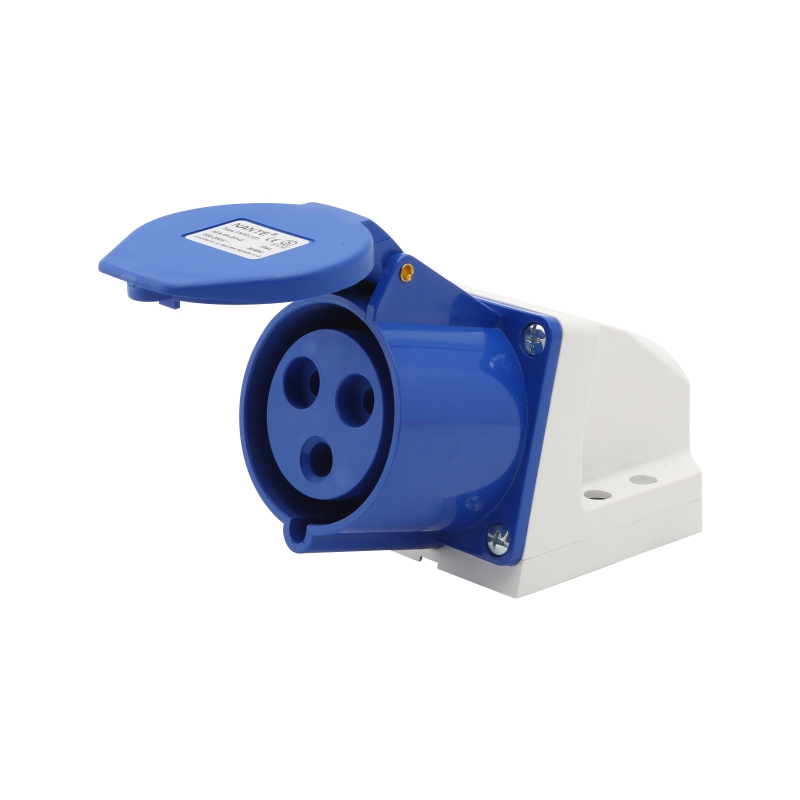
Why Is Outdoor Socket Box Material Choice Becoming a Bigger Part of Outdoor Safety
 Home / News / Industry News / Why Is Outdoor Socket Box Material Choice Becoming a Bigger Part of Outdoor Safety
 Outdoor power systems are no longer treated as a simple add-on. As more homes, commercial spaces, and public areas depend on outdoor lighting, garden equipment, and exterior power access, attention is shifting to the enclosure itself. The Outdoor Socket Box has become part of that conversation, not just because it covers electrical parts, but because its material can influence how well the whole setup holds up over time.
A box used outside faces a different reality from one placed indoors. Rain, humidity, temperature changes, dust, and direct exposure to sunlight can all affect performance. Over time, those conditions can weaken the wrong material or create problems around the enclosure.
That is why the discussion is not only about appearance or price. It is also about how the material behaves in real-life use. Some materials are chosen for strength. Others are chosen for insulation or resistance to moisture. A few are selected because they offer a practical balance between protection and day-to-day handling.
What people usually look for
Stainless steel remains a familiar choice for outdoor enclosures because it performs well in demanding conditions. It is known for holding up against rust and environmental stress, which makes it useful in places where moisture is part of everyday life.
It also gives a solid, stable feeling to the enclosure. That matters in outdoor settings where the box may be exposed to wear for long periods. While it is not always the lowest-cost option, many users see value in the way it supports durability and reduces the need for frequent replacement.
Why it stands out
For projects that need dependable protection, stainless steel often stays near the top of the list.
Mild steel is often chosen for a different reason. It offers a practical balance between structural strength and fabrication flexibility. In many cases, that makes it easier to shape, join, and assemble into a secure enclosure.
This can matter a great deal when the goal is to build a box that fits a specific use without making the process overly complicated. Mild steel is widely appreciated in manufacturing because it supports solid construction and can be adapted to different designs with relative ease.
Main advantages of mild steel
For buyers who want a dependable material that remains practical in production, mild steel continues to be a common and sensible choice.
Polyester offers a different path altogether. As a non-metallic material, it brings natural insulating qualities and strong resistance to moisture and chemicals. That makes it appealing in environments where corrosion is a concern or where electrical safety requires extra attention.
It also behaves well in changing conditions. Instead of reacting like metal, polyester can adapt more comfortably to temperature shifts, which helps it stay stable in outdoor use. Because it does not conduct electricity in the same way metal materials can, it has a useful place in many protective applications.
Why polyester is often selected
For certain installations, polyester offers a clean and practical answer without relying on metal construction.
| Material | Main Strength | Typical Use Value | Overall Impression |
|---|---|---|---|
| Stainless Steel | Corrosion resistance and strength | Good for demanding outdoor environments | Durable and reliable |
| Mild Steel | Easy fabrication and solid structure | Useful for practical enclosure builds | Functional and adaptable |
| Polyester | Insulation and moisture resistance | Helpful in sensitive or variable settings | Non-metallic and protective |
Outdoor electrical systems keep expanding in both residential and commercial spaces. As that happens, people are starting to notice the role of the enclosure more clearly. A box that works well indoors may not perform the same way outside, where weather and wear come into play from day one.
That is why the Outdoor Socket Box has become more than a simple accessory. It is part of the safety and reliability picture. If the material is well matched to the environment, the enclosure can support the entire system more effectively. If it is not, small issues can appear sooner than expected.
Different projects call for different materials, and that is exactly what gives this topic its importance. A coastal area may push people toward corrosion resistance. A utility area may need stronger fabrication and structure. A location with moisture or insulation concerns may make a non-metallic option more attractive.
The good common decision points
how much exposure the box will face
whether insulation is a priority
how much maintenance is acceptable
how important long-term durability is
whether the enclosure needs to be easy to manufacture or install
These are not abstract questions. They affect how well the box performs after installation and how much attention it may need later.
| Use Scenario | Material That Often Fits Well | Reason |
|---|---|---|
| Wet or corrosive environments | Stainless steel | Strong resistance to environmental damage |
| General-purpose enclosure builds | Mild steel | Practical structure and easier fabrication |
| Areas needing insulation | Polyester | Non-metallic and electrically insulating |
| Changing outdoor conditions | Polyester or stainless steel | Stable performance in variable settings |
The reason this subject is getting more attention is simple: outdoor power use is becoming more common, and users want fewer surprises. They are no longer looking only at the visible side of a product. They want to know how it behaves after months or years outside.
That shift has changed the way products are evaluated. Material choice is no longer a background detail. It is part of the decision. In fact, for many buyers, it may be one of the good things they compare.
Outdoor electrical protection depends on more than a cover or a casing. It depends on how that enclosure responds to the environment around it, and that is where material choice becomes important. Stainless steel, mild steel, and polyester each bring different strengths, and each one fits a different kind of use.
As outdoor power access continues to grow, the Outdoor Socket Box will keep drawing attention as a practical part of the system rather than a minor accessory. For readers looking into related products or outdoor electrical enclosure topics, more details can be found at nante.
 +86-577-62731897
 shireen@nante.com
 No.688 chezhan Road, Liushi town, Wenzhou, China
Copyright © 2024 Fly-Dragon Electrical Co., Ltd. All Rights Reserved.
 浙公网安备33038202003041号
 Privacy
Outdoor Socket Box Factory & Outdoor Electrical Distribution Panel Factory



 English
 Español
 Português
 Deutsch